
What Is Biofouling? A Complete Guide for Boat Owners and Marine Professionals
Biofouling is one of the most significant challenges in the marine industry. Whether you own a small recreational boat or manage commercial vessels, understanding biofouling is essential for performance, maintenance, and cost control. In this guide, you’ll learn what biofouling is, how it forms, why it matters, and how to prevent it effectively.
What Is Biofouling? (Definition)
Biofouling—also known as marine fouling—is the accumulation of living organisms on underwater surfaces. These include microorganisms, algae, seaweed, barnacles, mussels, and other marine life.
Biofouling commonly forms on:
Boat hulls
Propellers and running gear
Keels and rudders
Pontoons and docks
Offshore platforms
Seawater cooling systems
Marine sensors and equipment
Once attached, these organisms grow quickly and become increasingly difficult to remove.
The Four Stages of Biofouling
Biofouling develops in a predictable sequence:
1. Molecular Layer Formation
Within minutes of water contact, organic molecules coat the surface, preparing it for organism attachment.
2. Microfouling (Biofilm)
Bacteria, diatoms, and microalgae create a sticky slime layer, which serves as the base for more severe fouling.
3. Soft Fouling
Algae, seaweed, and plant-like organisms begin to attach and grow.
4. Hard Fouling
Barnacles, mussels, and tubeworms form strong, cement-like bonds. This final stage is the most damaging and expensive to remove.

Why Is Biofouling a Problem?
Biofouling has a major impact on vessel performance and marine operations.
1. Increased Drag and Fuel Use
Even mild fouling increases hull resistance. Heavily fouled vessels can consume up to 40% more fuel.
2. Reduced Speed and Efficiency
Drag lowers acceleration, speed, and responsiveness.
3. Higher Maintenance Costs
Frequent scraping, hull cleaning, and repainting become necessary to manage growth.
4. Environmental Impact
Biofouling can transfer invasive species between regions, harming local ecosystems.
5. Equipment Damage
Growth inside pipes, intakes, and cooling systems can cause blockages and failures.
Where Does Biofouling Grow the Fastest?
Biofouling develops rapidly in:
Warm coastal waters
Marinas with high nutrient levels
Boats that remain static for long periods
Harbors with low water circulation
Saltwater environments show the fastest growth, but freshwater vessels also experience fouling over time.
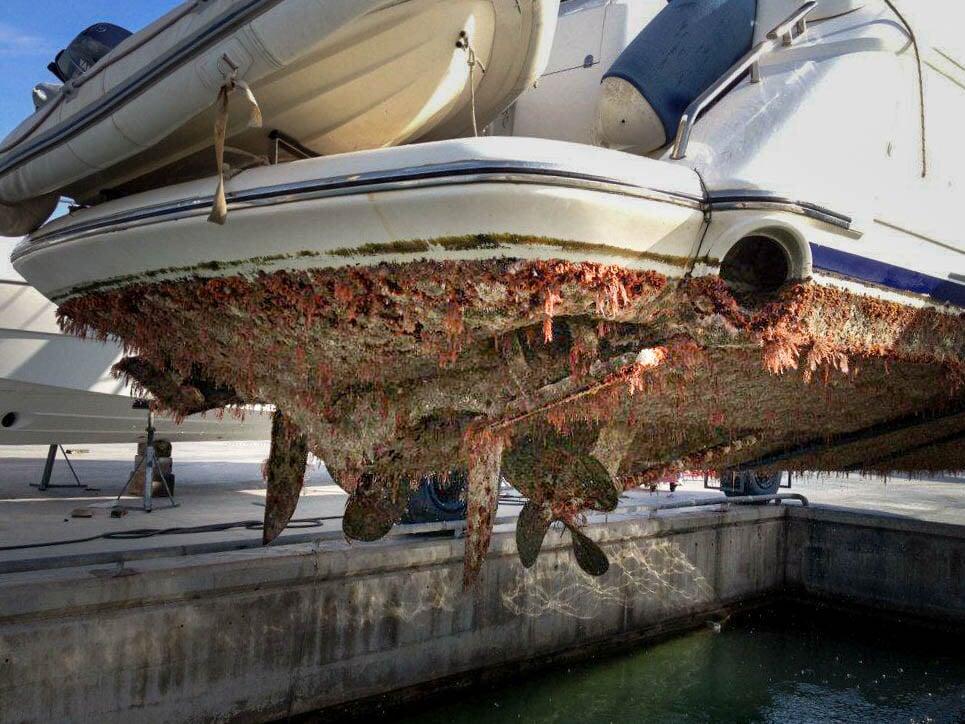
Biofouling can cause serious damage to your propulsion, drives, props & rudders.
You can edit text on your website by double clicking on a text box on your website. Alternatively, when you select a text box a settings menu will appear. your website by double clicking on a text box on your website. Alternatively, when you select a text box.
How to Prevent or Reduce Biofouling
Effective biofouling management includes a combination of methods:
1. Antifouling Coatings
Specialized bottom paints designed to discourage growth.
2. Regular Cleaning
Hull scrubbing, diver cleaning, and scheduled haul-outs.
3. Fouling-Release Coatings
Smooth silicone-based coatings that make it harder for organisms to attach.
4. Smart Maintenance Planning
Regular vessel movement and proactive cleaning reduce buildup.
How Our Ultrasonic Antifouling Solutions Solve the Biofouling Problem
While traditional antifouling coatings and cleaning are helpful, they often cannot stop fouling completely—especially for vessels in the water year-round. This is where our ultrasonic antifouling systems provide a modern, sustainable advantage.
Our technology uses high-frequency ultrasonic waves that disrupt the formation of biofilm. Since biofilm is the foundation of all marine growth, preventing it stops algae, barnacles, and other organisms from attaching in the first place.
Key Benefits of Our Ultrasonic Antifouling Solutions
Prevents biofilm at the earliest stage
Reduces soft and hard fouling, including barnacles and mussels
Improves fuel efficiency by keeping hulls smooth and clean
Protects pipes, intakes, and cooling systems from blockages
Eco-friendly and chemical-free — no biocides or pollution
Continuous 24/7 protection with minimal maintenance
More cost-effective than frequent haul-outs and repainting
By keeping hulls and underwater components clean, our ultrasonic systems help boat owners reduce operating costs, improve performance, and sail more efficiently throughout the entire season.
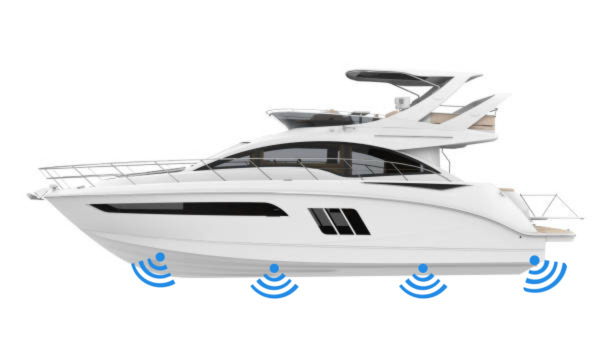
Our Ultrasonic Transducers keeps your hull & drive system clean.
The transduces send ultrasonic sound waves which prevents organisms from sticking on the hull.
A clean hull saves on fuel up to 40 %
Less repainting, divers, cleaning & expensive haul outs.
Less pollution of our precious waters.
Easy installation.
Lifetime warranty.
Conclusion
Biofouling is a natural marine process with significant consequences for fuel consumption, vessel performance, and long-term maintenance.
Understanding how it develops—and investing in the right prevention methods—helps protect your vessel and avoid unnecessary costs.
With our ultrasonic antifouling solutions, you gain a powerful, eco-friendly, and highly effective way to control biofouling, ensuring cleaner hulls, better performance, and lower operating expenses.


